Rated 5 star on

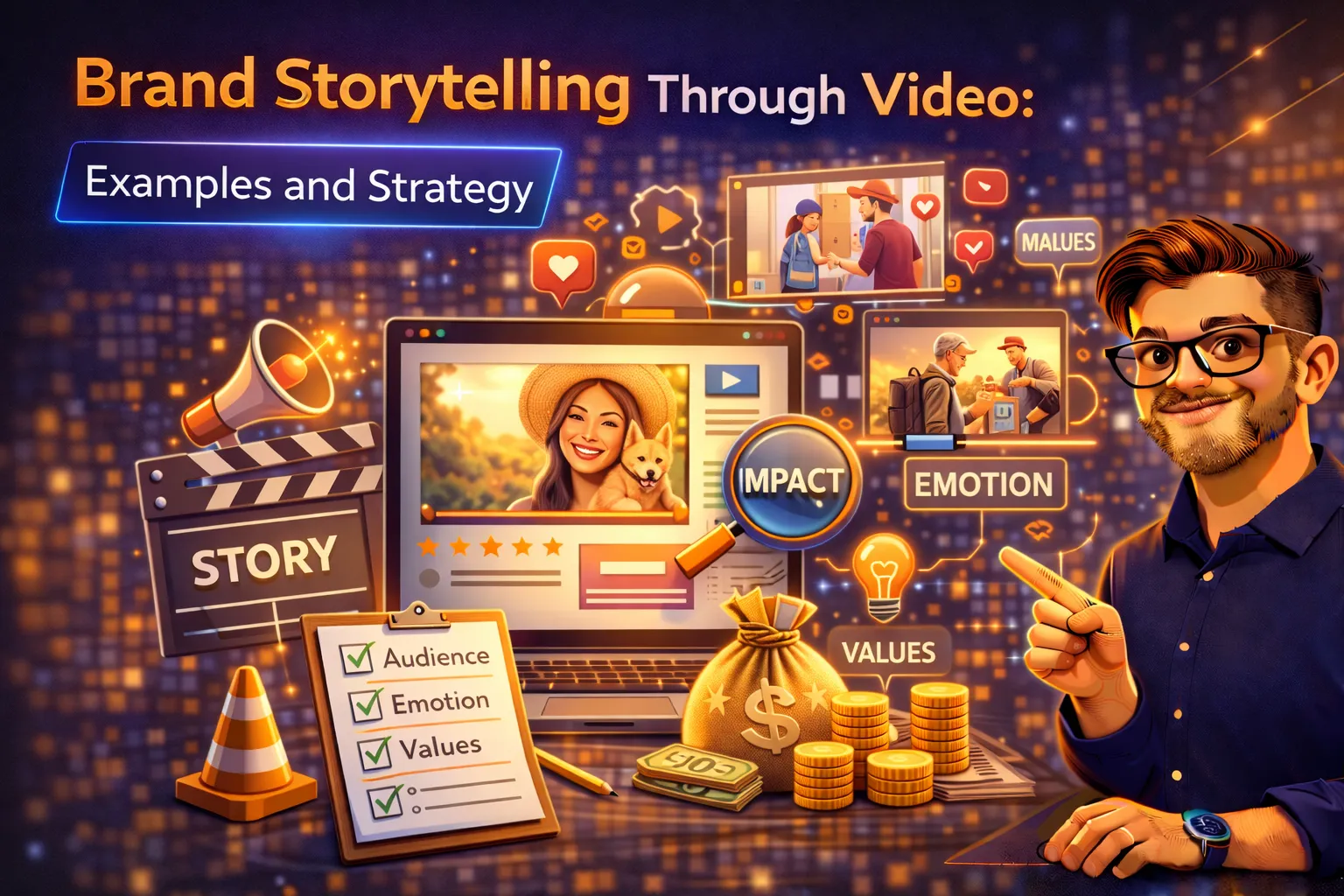
Brand Storytelling Through Video: Examples and Strategy
Quick answer
Brand storytelling uses narrative to communicate a company's values, mission, and personality rather than its feature list. Video is the ideal medium because it carries tone, face, and pacing at once, which is why marketers consistently report it as their highest-return content format. Whether sixty seconds or ten minutes, the best brand story videos share one structure.
Published: March 1, 2026 | Reading Time: ~7 minutes | Category: Video
Key Takeaways
- Brand storytelling is the practice of using narrative to communicate your company’s values, mission, and personality.
- There’s a reason marketers consistently report video as their highest-ROI content format.
- Whether your video is 60 seconds or 10 minutes, the best brand story videos share a common structure.
- Having a great story isn’t enough if you don’t have a strategy for how to tell it, to whom, and where.
- You don’t need to be a Fortune 500 company to tell a compelling brand story through video.
Every brand has a story. The question is whether you’re telling it in a way that actually makes people care. In 2026, video is no longer optional for brand storytelling—it’s the dominant format through which audiences discover, evaluate, and connect with businesses. Consumers are more skeptical than ever of polished ads and corporate messaging. What cuts through is authentic, story-driven video that shows the human side of your brand.
This guide breaks down what brand storytelling through video looks like in practice, why it works, and how to build a strategy that gets results—even without a Hollywood production budget.
What Is Brand Storytelling Through Video?
Brand storytelling is the practice of using narrative to communicate your company’s values, mission, and personality. When done through video, it becomes one of the most powerful tools in marketing because video combines visual, auditory, and emotional cues in a way no other format can.
Brand storytelling through video is not the same as a product demo or an explainer video. The goal isn’t primarily to educate—it’s to create an emotional connection. You’re answering questions your audience didn’t even know they were asking: Who are these people? Do I trust them? Do their values align with mine?
The most effective brand videos tend to focus on one or more of the following elements:
- Origin stories: How and why the business was founded
- Customer transformation stories: Before-and-after journeys your clients have experienced
- Behind-the-scenes content: The people, processes, and culture behind the product
- Mission-driven narratives: Why your company exists beyond making money
Why Video Is the Ideal Medium for Brand Stories
There’s a reason marketers consistently report video as their highest-ROI content format. Video creates an immersive experience that written content simply cannot replicate. Facial expressions, tone of voice, music, pacing—all of these work together to trigger emotional responses in ways that words on a page cannot.
From a practical standpoint, video also dominates engagement metrics across every major platform. Short-form video on Instagram Reels and TikTok drives massive organic reach. Long-form video on YouTube builds deep brand authority. Even LinkedIn’s algorithm now heavily favors native video content, making it a powerful channel for B2B brands that want to tell their story to decision-makers.
What does every good brand story video share?
Whether your video is 60 seconds or 10 minutes, the best brand story videos share a common structure.
Who should the story be about?
Every compelling story starts with a character the audience can identify with—and a problem worth solving. This could be your founder, a customer, or even a community your brand serves. The conflict creates tension that keeps viewers engaged and invested in the outcome.
Does production polish help or hurt?
Modern audiences are remarkably good at detecting inauthenticity. A slick, over-produced video that feels scripted will often underperform compared to a genuine, slightly rough-around-the-edges story told by a real person. This is especially true for small and mid-sized businesses where the founder or team is the brand.
3. Clear Values and Mission
Your audience should finish watching the video with a clear sense of what you stand for. Not what your product does—what you believe in. Brands that communicate values clearly build stronger loyalty, reduce price sensitivity, and attract customers who are genuinely aligned with what they offer.
How should a brand story video end?
Great stories have emotional arcs. The viewer should feel something at the end—hope, pride, inspiration, relief. This emotional payoff is what makes a video shareable and memorable. It’s also what triggers action: when people feel connected to a brand, they’re far more likely to buy, recommend, or follow.
Brand Storytelling Video Strategy: How to Build Yours
Having a great story isn’t enough if you don’t have a strategy for how to tell it, to whom, and where. Here’s how to build a brand storytelling video strategy that actually drives results.
How do you define your brand narrative?
Before you hit record, get clear on the core story you want to tell. What problem existed before your company came along? What does your brand believe that others in your space don’t? What transformation do you create for your clients? These questions form the backbone of every piece of video content you’ll create.
Step 2: Match Video Format to Platform and Audience
Different platforms reward different video formats. Short-form vertical video (under 90 seconds) dominates on TikTok, Instagram Reels, and YouTube Shorts. Horizontal, long-form video (3–10+ minutes) performs best on YouTube and Facebook. LinkedIn rewards native video uploads that are 1–3 minutes long for B2B audiences. Build your strategy around where your ideal customers actually spend time.
Step 3: Build a Video Content Pillar System
Instead of creating one-off videos, build a repeatable system around video content pillars—recurring formats that reinforce your brand story. Examples might include a weekly “Meet the Team” feature, monthly client spotlight videos, or a behind-the-scenes series showing how your work gets done. Consistency compounds: audiences learn what to expect and keep coming back.
Step 4: Repurpose and Distribute Strategically
A single well-produced brand video can be repurposed across multiple formats and platforms. A 5-minute origin story becomes a 60-second highlight reel for Instagram, a series of quote cards for LinkedIn, and an embedded piece of content on your About page. Repurposing extends your content ROI dramatically without requiring continuous production resources.
Step 5: Measure What Matters
Brand storytelling videos are not always optimized for immediate conversions—their value often shows up in brand lift, increased organic search traffic, longer website sessions, and improved social proof metrics. Track average view duration (a key indicator of storytelling quality), shares, comments, and downstream website behavior to understand what’s resonating.
Real-World Examples of Effective Brand Storytelling Through Video
You don’t need to be a Fortune 500 company to tell a compelling brand story through video. Here are examples of approaches that work at different scales:
The Founder Story (Any Size Business)
A roofing company owner records a 3-minute video explaining why she started her business after watching homeowners get taken advantage of by dishonest contractors. The video has 40,000 views on Facebook and is the first touchpoint for a significant percentage of new leads. No production crew, no script—just a real story told directly to camera.
The Client Transformation Story (Service Businesses)
A dental practice films a short testimonial featuring a patient who avoided major oral health issues thanks to early intervention. The video doesn’t lead with technology or pricing—it leads with the patient’s relief and gratitude. It performs 3x better than any promotional ad the practice has run.
The Process Video (B2B and Professional Services)
A law firm creates a series of short videos walking potential clients through exactly what to expect during each phase of a personal injury case. The videos demystify a stressful process, position the firm as a trusted guide, and dramatically improve qualified lead conversion rates from organic search.
Common Brand Video Mistakes to Avoid
- Leading with the product instead of the story: Audiences tune out content that feels like an ad; lead with humanity first.
- Skipping captions: More than 85% of social media videos are watched without sound; captions are non-negotiable.
- No clear next step: Even brand-focused videos need a soft CTA—whether that’s following your page, visiting your site, or watching another video.
- Inconsistent posting: Sporadic video output undermines brand trust and algorithm performance; commit to a cadence you can sustain.
- Over-polishing at the expense of authenticity: Great lighting is nice; a genuine story is essential.
Conclusion: Your Story Is Your Competitive Advantage
In a marketplace where every competitor can offer similar services at similar prices, your brand story is one of the few things that cannot be replicated. No other company has your origin, your team, your culture, or your client relationships. Video gives you the most powerful possible way to communicate that story—and when executed well, it transforms how your audience sees, trusts, and chooses you.
Start with one story. Tell it authentically. Measure the response. Then build from there. Brand storytelling through video isn’t a one-time campaign—it’s an ongoing conversation between your brand and the people it serves.
Ready to put your brand story to work? Contact Astra Results to learn how we help service businesses use video and content to build authority and generate leads.