 Rated 5 star on

Home Services Agents: Scheduling Around Weather
Quick answer
An AI agent can check forecasts for each job and flag weather risks days ahead. It proposes new times and drafts customer notices, but schedulers approve every change. In summer, move outdoor work to mornings and stop when lightning is near. After storms, triage emergencies first and follow Florida's price-gouging law.
For roofers, painters, landscapers and pool companies, weather runs the schedule. In South Florida, afternoon storms roll in most summer days and hurricane season stretches from June through November. Every rain delay means calls, shuffled crews and idle trucks. An AI agent can watch the forecast and draft new plans, while staff decide.
Key Takeaways
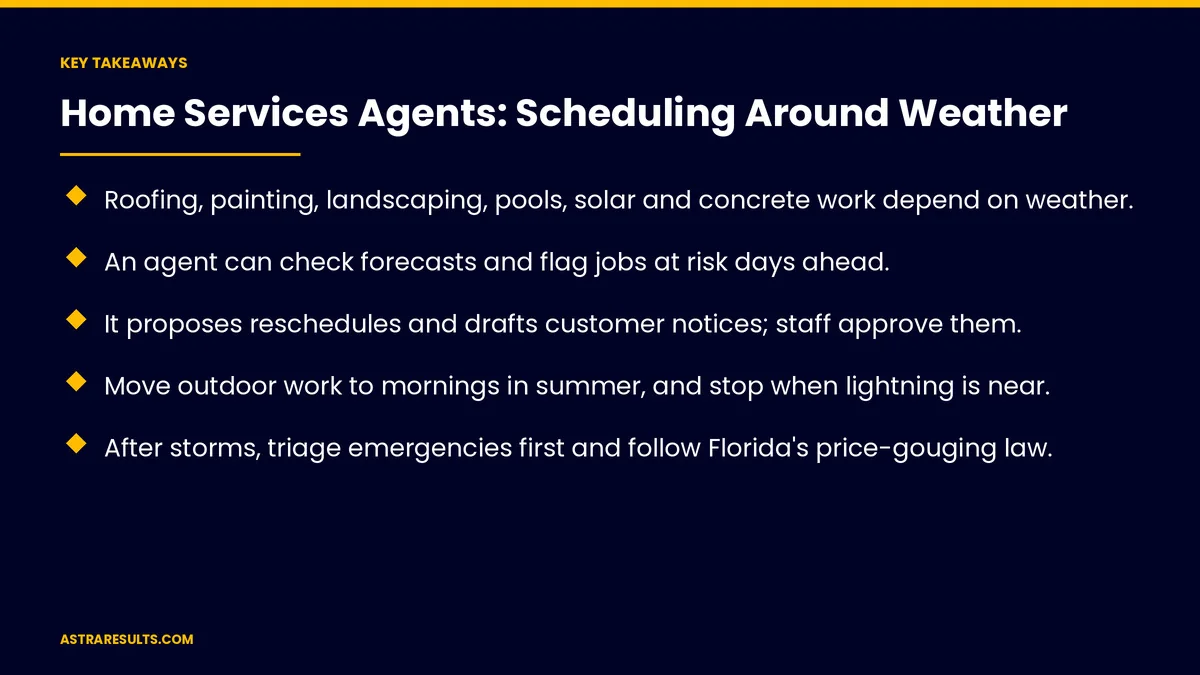
- Roofing, painting, landscaping, pools, solar and concrete work depend on weather.
- An agent can check forecasts and flag jobs at risk days ahead.
- It proposes reschedules and drafts customer notices; staff approve them.
- Move outdoor work to mornings in summer, and stop when lightning is near.
- After storms, triage emergencies first and follow Florida's price-gouging law.
- Measure weather cancellations, rebooking time and crew idle hours.
Published: October 13, 2026 | Reading Time: ~8 minutes | Category: Custom AI Agents
This guide covers weather-aware scheduling agents for home services: which jobs are at risk, reading forecasts, proposing reschedules, telling customers, keeping crews safe, hurricane season, after-storm demand, guardrails and what to measure. Put plainly: let the agent watch the sky and draft the changes, and let your team approve them.
In This Playbook
- Which jobs are at risk
- Reading the forecast
- Proposing reschedules
- Telling customers
- Keeping crews safe
- Hurricane season
- After-storm demand
- Guardrails
- What to measure
- The first three months
Which jobs are at risk
Rain-sensitive work. Roofing, exterior painting, sealing and concrete.
Wind-sensitive work. Ladders, lifts, tree work and solar panels.
Heat-sensitive work. Long outdoor jobs in summer afternoons.
Drying and curing times. Paint and concrete need dry hours after the job, not just during it.
Reading the forecast
Official forecasts. National Weather Service data for each job address.
Rain chance and timing. Morning versus afternoon storms.
Wind, lightning and heat. Each trade sets its own limits.
Days ahead. Flag risky jobs early, then recheck the day before.
Proposing reschedules
Find the next good window. With crew availability and travel time.
Swap work. Move indoor or covered jobs into rainy slots.
Morning starts. Shift outdoor work earlier on storm days.
Staff approve. The agent proposes; a scheduler confirms.
Telling customers
Early notice. Customers hear about changes before crews would arrive.
Clear options. New times to accept or change.
Text only with consent. Email otherwise.
Fewer calls. Customers know what's happening without phoning the office, as covered in the intake gap.
Keeping crews safe
Lightning rules. "When thunder roars, go indoors"; stop outdoor work when storms are near.
Heat plans. Water, shade, rest breaks and earlier starts.
Alerts to crew leads. Storm warnings during the day.
Hurricane season
Before storms. Secure job sites, materials and equipment.
Pause outdoor work. And notify customers in advance.
Draft notices early. Ready to send after staff approval, as in South Florida logistics agents.
After-storm demand
Triage emergencies first. Roof leaks, fallen trees and homes without cooling, especially for elderly or vulnerable customers.
A clear queue. Requests sorted by urgency and location.
Fair pricing. Florida's price-gouging law applies during declared emergencies, so agents never change prices on their own.
Advertising. Adjust ad budgets to crew capacity, as covered in LSA budgets.
Guardrails
People approve customer-facing changes. Reschedules, notices and pricing.
Limited access. The agent reads schedules and forecasts and drafts changes.
Logs and a stop button. As covered in agent security.
Start with one trade. Then expand, as covered in the action layer.
What to measure
Weather cancellations. Same-day cancellations caused by weather.
Time to rebook. Days from cancellation to the new date.
Crew idle hours. On weather days.
Customer calls about changes. Fewer with early notice.
Emergency response time. After storms.
The first three months
Days 1–30: set rules
Define weather limits for each trade, connect the schedule and forecast data and choose one trade to start.
Days 31–60: pilot
Let the agent flag risky jobs and propose reschedules and notices, with schedulers approving every change.
Days 61–90: storm-ready
Add hurricane prep and after-storm triage, measure cancellations and rebooking time and expand to more trades.
How Astra builds scheduling agents
Astra Results Marketing builds weather-aware scheduling agents for home services companies. Our agents read forecasts, flag jobs at risk, propose reschedules and draft customer notices, while your team approves every change.
Engagements begin with a scheduling review through our custom AI agent development team.
Related reading
Frequently asked questions
How can an AI agent help with weather delays?
By checking forecasts for each job, flagging jobs at risk, proposing new times and drafting customer notices for staff to approve.
Which home services jobs depend most on weather?
Roofing, exterior painting, sealing, concrete, landscaping, pools, tree work and solar installation.
Should the agent reschedule customers automatically?
No. It should propose changes and draft notices, and a scheduler should approve them.
How should crews handle summer storms?
Schedule outdoor work in the morning, watch for lightning and stop outdoor work when storms are near.
What changes after a hurricane?
Demand surges. Triage emergencies first, sort requests by urgency and location and follow Florida's price-gouging law during declared emergencies.
How do we measure success?
Track weather cancellations, time to rebook, crew idle hours, customer calls about changes and emergency response times.
Ready to stop losing days to the weather? Astra Results Marketing builds scheduling agents that read forecasts, flag jobs at risk and draft reschedules and notices, with your team approving every change. ▸ CALL (786) 321-2866 · ▸ REQUEST YOUR CONSULTATION





