 Rated 5 star on

Search Ads for Orlando Tourism Businesses
Quick answer
Orlando tourism businesses need two search campaigns: one for trip planners at home weeks ahead, and one for visitors already in town. Planning campaigns use location settings that include interest in Orlando. Add Spanish and Portuguese ads for Latin American and Brazilian visitors. Shift budgets around school breaks and conventions, and avoid implying theme park ties.
Most Orlando tourism customers search long before they arrive. A family in Ohio plans a rental and a group in São Paulo books a tour. Once in town, they search again for tonight. Ads aimed only at people in Orlando miss planners; ads that ignore arrivals miss last-minute bookings.
Key Takeaways
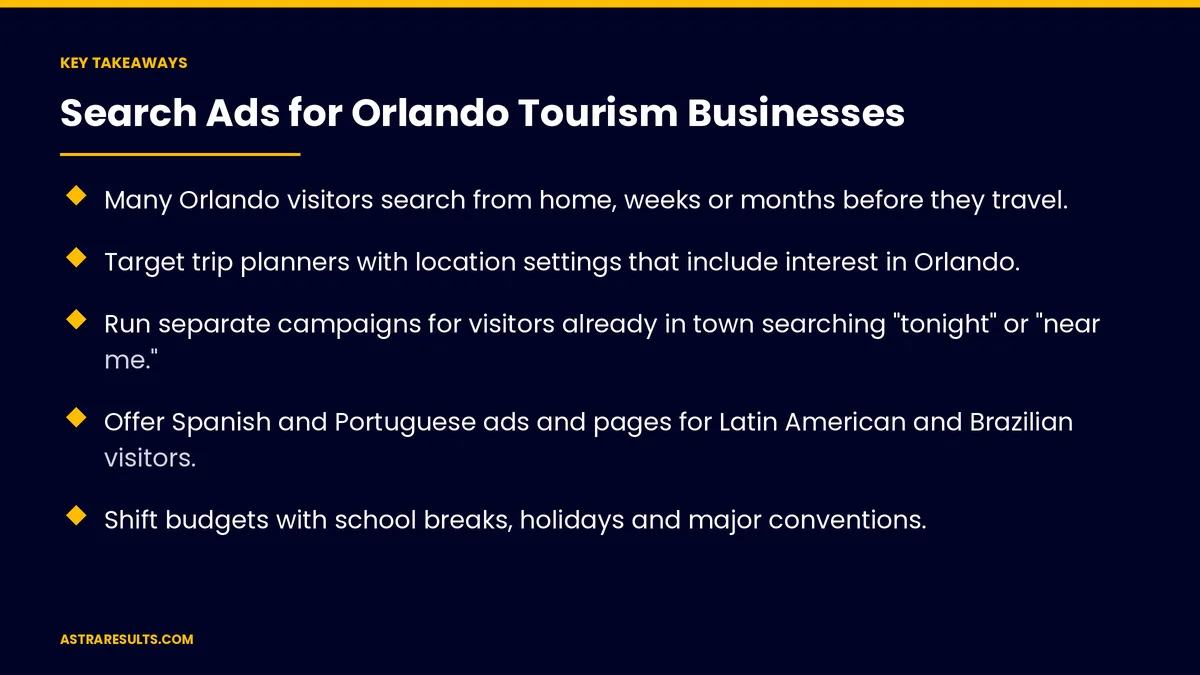
- Many Orlando visitors search from home, weeks or months before they travel.
- Target trip planners with location settings that include interest in Orlando.
- Run separate campaigns for visitors already in town searching "tonight" or "near me."
- Offer Spanish and Portuguese ads and pages for Latin American and Brazilian visitors.
- Shift budgets with school breaks, holidays and major conventions.
- Don't imply ties to theme parks you aren't affiliated with.
Published: October 22, 2026 | Reading Time: ~9 minutes | Category: Pay-Per-Click Advertising
This guide covers search ads for Orlando tours, restaurants, rentals and hotels: reaching planners and arrivals, location settings, Spanish and Portuguese ads, seasons and conventions, trademarks, pricing rules and measurement. Put plainly: reach visitors while they plan, again when they arrive, and in the languages they speak.
In This Playbook
- Two moments: planning and arriving
- Location settings for tourism
- Spanish and Portuguese ads
- Seasonal and convention calendars
- Trademark care
- Pricing in ads
- Booking and direct revenue
- Mobile and last-minute searches
- How should Orlando tourism ads be measured?
- The first three months
Two moments: planning and arriving
Planning. Searches from home about tours, rentals, restaurants and experiences.
Arriving. Searches in Orlando for "things to do tonight" or "restaurants near me."
Different messages. Planners compare and book ahead; arrivals want something now.
Different campaigns. Separate budgets and ads for each moment.
Location settings for tourism
Presence or interest. Reaches people in Orlando and people searching about Orlando from elsewhere, which suits trip planners.
Presence only. For arrival campaigns aimed at visitors already in town.
The opposite of local services. Service companies usually target presence only, as covered in Google Ads for Tampa Bay service companies.
Check search terms. Make sure the searches match your offer, as covered in negative keyword discipline.
Spanish and Portuguese ads
Latin American visitors. Many travel from across Latin America, including Brazil.
Ads in Spanish and Portuguese. Matched to pages in the same language.
Natural wording. Written or checked by fluent speakers.
Message match. Language and offer consistent from ad to page, as covered in message match.
Seasonal and convention calendars
School breaks and holidays. Spring break, summer and winter holidays bring families.
Conventions. Large events bring business travelers with evenings free.
Hurricane season. Plan messaging for storms and closures.
Shift budgets. Spend more ahead of busy periods, when planners book.
Trademark care
Keywords versus ad text. In the US, Google generally allows bidding on trademarked terms, but owners can restrict their use in ad text.
Don't imply affiliation. Avoid suggesting partnerships with theme parks you aren't connected to.
Describe location factually. "Ten minutes from the parks" rather than using attraction names in headlines.
The wider hospitality picture is covered in GenAI in Orlando's hospitality economy.
Pricing in ads
Lodging totals. Hotels and vacation rentals must show total prices, including mandatory fees, under the FTC's fee rule.
Clear offers. Dates, limits and conditions where they apply.
Match the page. The price in the ad should match the booking page.
Booking and direct revenue
Send to your own booking. Direct bookings avoid third-party commissions, as covered in beating the OTAs on search.
Group and event inquiries. Separate campaigns for groups, as in event venue GenAI.
Campaign types. Search for high intent, with other campaign types where they fit, as weighed in Search, Performance Max or both.
Mobile and last-minute searches
Fast mobile pages. Visitors search on phones. Restaurants also need strong local pages, as in restaurant group SEO.
Clear availability. Show what's open today.
Call and map buttons. Easy to contact and find.
How should Orlando tourism ads be measured?
Bookings by campaign. Planners versus arrivals.
Cost per booking. By language and season.
Direct booking share. Against third-party bookings.
Booking lead time. How far ahead visitors book.
Search terms. Relevance and wasted spend.
The first three months
Days 1–30: split campaigns
Separate planner and arrival campaigns with the right location settings. Review ad text for trademark issues and check that lodging prices show totals.
Days 31–60: add languages and pages
Launch Spanish and Portuguese ads with matching pages, and send bookings to your own system. Add negative keywords from search term reports.
Days 61–90: plan the calendar
Map school breaks, holidays and conventions, shift budgets ahead of busy periods and compare cost per booking by campaign, language and season.
How Astra runs Orlando tourism ads
Astra Results Marketing runs search ads for Orlando tourism businesses. We split planner and arrival campaigns, set the right location targeting, add Spanish and Portuguese ads and pages and plan budgets around Orlando's seasons and conventions.
Ads stay clear of trademark problems and pricing rules, and results are measured by bookings. Engagements begin with an account and season review through our pay-per-click advertising team.
Related reading
Frequently asked questions
Should Orlando tourism ads target people outside Orlando?
Yes, for planning campaigns. Many visitors search from home weeks or months ahead, so location settings that include interest in Orlando reach them.
How are arrival campaigns different?
They target visitors already in town searching for things to do now, with presence-only location settings and offers for today or tonight.
Should we run ads in Spanish and Portuguese?
Yes, if you serve Latin American and Brazilian visitors, with landing pages in the same language written by fluent speakers.
Can we mention theme parks in our ads?
Be careful. Trademark owners can restrict use of their marks in ad text, and you shouldn't imply affiliation. Describe your location factually.
Do lodging ads need to show total prices?
Yes. The FTC's fee rule requires hotels and vacation rentals to show total prices, including mandatory fees, when they display prices.
When should we spend more?
Ahead of school breaks, holidays and major conventions, when planners are booking.
Ready to reach Orlando visitors when they plan and when they arrive? Astra Results Marketing runs tourism search ads with planner and arrival campaigns, Spanish and Portuguese ads, seasonal budgets and clean trademark and pricing practices. ▸ CALL (786) 321-2866 · ▸ REQUEST YOUR CONSULTATION





