 Rated 5 star on

Fitness Brand Merch and Supplements Online
Quick answer
Fitness brands should sell merch and supplements to their own members first, with perks and early access. Apparel is simple to sell. Supplement claims need the FDA disclaimer and can't promise to treat or prevent disease. Paid endorsements must be disclosed. Subscriptions and reorder reminders build steady revenue.
Gyms, studios and fitness creators have loyal communities that want to wear the brand and use what their coaches recommend. An online store turns that loyalty into steady revenue. Apparel is fairly simple to sell. Supplements are different: claims about what a product does are closely regulated, and payment processors treat the category with extra caution.
Key Takeaways
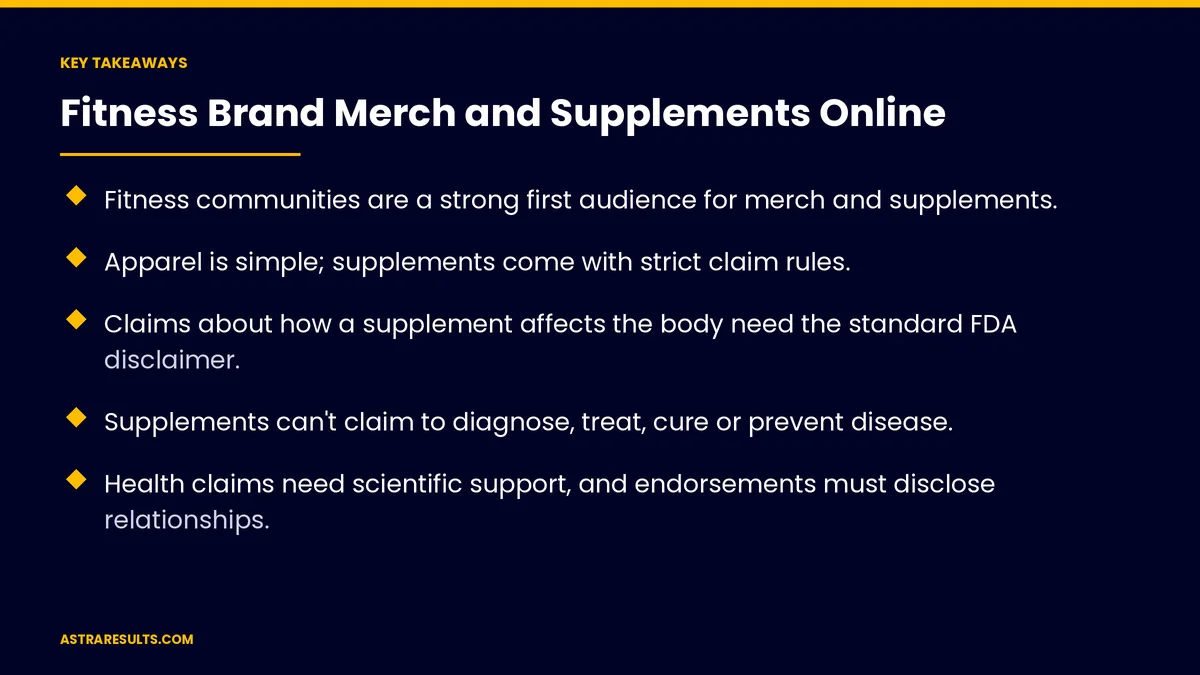
- Fitness communities are a strong first audience for merch and supplements.
- Apparel is simple; supplements come with strict claim rules.
- Claims about how a supplement affects the body need the standard FDA disclaimer.
- Supplements can't claim to diagnose, treat, cure or prevent disease.
- Health claims need scientific support, and endorsements must disclose relationships.
- Subscriptions and reorder reminders turn one-time buyers into steady revenue.
Published: October 12, 2026 | Reading Time: ~8 minutes | Category: E-Commerce Marketing
This guide covers selling fitness merch and supplements online: starting with members, merch that sells, supplement claim rules, endorsements and reviews, product pages, payments, subscriptions, shipping, repeat sales and what to measure. Put plainly: sell to your community first, keep supplement claims within the rules and build repeat orders.
This is general information, not legal advice. Review supplement labels, claims and endorsements with counsel.
In This Playbook
- Who should a fitness brand's online store target first?
- Merch that sells
- Supplement claim rules
- Endorsements and reviews
- Product pages
- Why do supplement sellers face stricter payment reviews?
- Subscriptions
- Shipping and returns
- Repeat sales
- What to measure
- The first three months
Who should a fitness brand's online store target first?
Your community first. Members, clients and followers.
In the app and studio. As in fitness apps in React Native.
Member perks. Early access and member pricing.
Merch that sells
Apparel people train in. Not just logo T-shirts.
Limited drops. Seasonal colors and event gear.
Accessories. Bottles, bags and bands.
Similar to other brands, as in restaurant retail.
Supplement claim rules
Body function claims need a disclaimer. Claims like "supports recovery" carry the standard FDA disclaimer.
No disease claims. Supplements can't claim to diagnose, treat, cure or prevent disease.
Scientific support. The FTC expects health claims to be backed by solid evidence.
Label rules. Ingredients and facts panels must be accurate.
Endorsements and reviews
Disclose relationships. Coaches and influencers who are paid or sponsored must say so.
Real reviews only. The FTC bans fake reviews.
No cherry-picked results. Typical results, not outliers.
Image and claim rules are covered in creative compliance.
Product pages
Clear photos and sizing. As covered in product page conversion.
Ingredients and facts panels. Easy to read.
Careful wording. Claims reviewed before publishing.
Why do supplement sellers face stricter payment reviews?
Higher-risk category. Processors often review supplement sellers more closely.
Choose processors carefully. And follow their rules, as covered in integrating payment processors.
Subscriptions
Auto-refill supplements. Monthly or custom schedules.
Clear terms and easy cancellation. Before the first charge.
Reminders before renewals. No surprise charges.
Shipping and returns
Clear policies. As covered in shipping and returns settings.
Opened supplements. State return rules clearly.
Repeat sales
Reorder reminders. Timed to when products run out, as in email and SMS flows.
Loyalty points. Across classes and purchases.
What to measure
Member purchase rate. Share of members who buy.
Repeat purchase rate. Especially for supplements.
Subscription retention. Months subscribers stay.
Claim reviews completed. Before every product launch.
Returns and chargebacks. Kept low.
The first three months
Days 1–30: plan
Choose merch and supplements, review labels, claims and endorsements with counsel and pick a payment processor that accepts the category.
Days 31–60: launch to members
Open the store to members first, with clear product pages, policies and real reviews.
Days 61–90: grow repeat sales
Add subscriptions with clear terms, reorder reminders and loyalty, and track repeat purchases.
How Astra builds fitness stores
Astra Results Marketing builds online stores for fitness brands. We launch to your community first, keep supplement claims within the rules, set up suitable payments and subscriptions and grow repeat sales.
Engagements begin with a store review through our e-commerce marketing team.
Related reading
Frequently asked questions
Who should a fitness brand sell to first?
Its own community: members, clients and followers, with perks and early access.
What claims can supplements make?
Claims about how a product supports the body, with the FDA disclaimer. They can't claim to diagnose, treat, cure or prevent disease.
Do health claims need evidence?
Yes. The FTC expects solid scientific support for health claims.
What rules apply to coach and influencer posts?
Paid or sponsored relationships must be disclosed, and fake reviews are banned.
Why are payments harder for supplements?
Processors often treat supplements as higher-risk and review sellers more closely.
What should we measure?
Member purchase rate, repeat purchases, subscription retention, claim reviews and returns and chargebacks.
Ready to sell merch and supplements to your community? Astra Results Marketing builds fitness stores that launch to members first, keep claims within the rules and grow repeat sales. ▸ CALL (786) 321-2866 · ▸ REQUEST YOUR CONSULTATION





