 Rated 5 star on


Marketplace Presence Without Losing the Brand
Quick answer
Brands can sell on Amazon and Walmart without losing control by planning brand protection first. Most protection programs require a registered or pending trademark. Keep titles, images and descriptions consistent with your own store. Set pricing policies with counsel and consider marketplace-only bundles. Build customer relationships elsewhere, and measure profit after fees.
Many shoppers start product searches on marketplaces like Amazon and Walmart. Brands that ignore them miss sales, while brands that rush in can end up competing with their own store, unauthorized sellers and counterfeits. A careful marketplace plan lets you reach those shoppers while keeping control of how your products look, what they cost and how customers experience them.
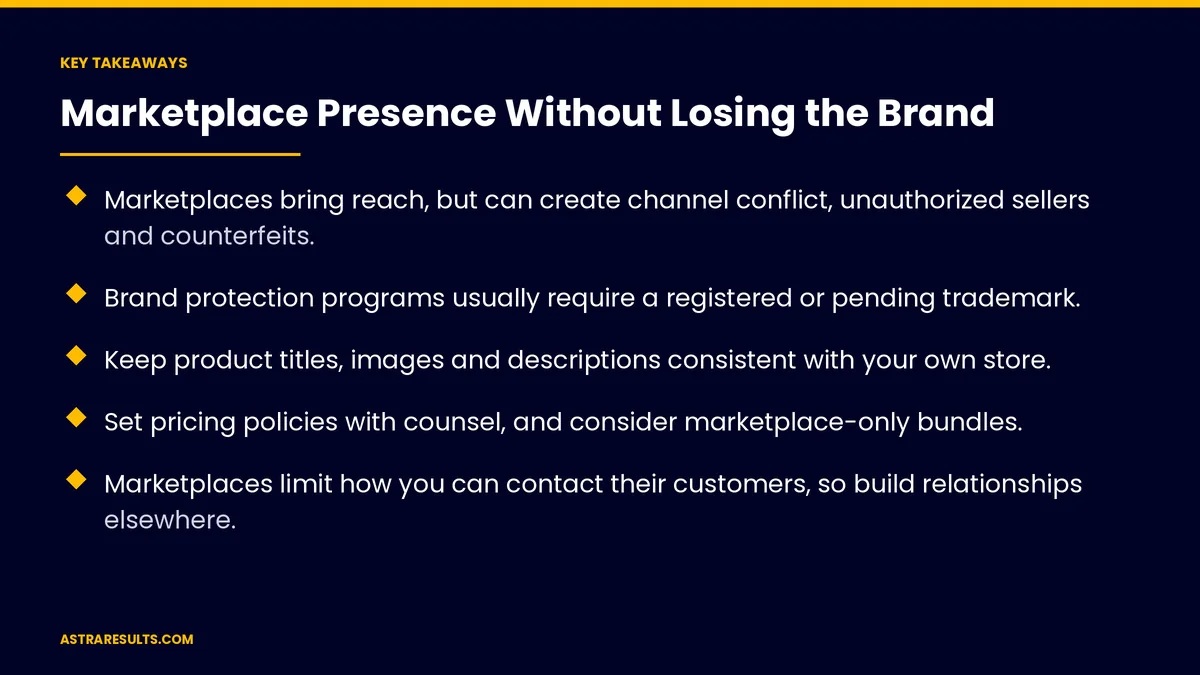
Key Takeaways
- Marketplaces bring reach, but can create channel conflict, unauthorized sellers and counterfeits.
- Brand protection programs usually require a registered or pending trademark.
- Keep product titles, images and descriptions consistent with your own store.
- Set pricing policies with counsel, and consider marketplace-only bundles.
- Marketplaces limit how you can contact their customers, so build relationships elsewhere.
- Measure profit after fees, not just marketplace sales.
Published: October 16, 2026 | Reading Time: ~9 minutes | Category: E-Commerce Marketing
This guide covers how brands build a marketplace presence without losing the brand: brand protection programs, consistent product content, pricing and channel conflict, unauthorized sellers, reviews, customer data limits, fees and fulfillment, and how to measure results. Put plainly: sell where shoppers search, but set the rules before you list.
In This Playbook
- Why marketplaces matter
- Protect the brand first
- Consistent product content
- Pricing and channel conflict
- How do we handle unauthorized marketplace sellers?
- Reviews
- Customer data limits
- Fees and fulfillment
- Which marketplaces should our brand sell on?
- What to measure
- The first three months
Why marketplaces matter
Shoppers search there. Many people check marketplaces first to compare products and prices.
Built-in trust. Familiar checkout and delivery promises lower hesitation.
New customers. Reach people who would never find your store.
The trade-off. Less control over pricing, presentation and the customer relationship. The broader picture is covered in growing an online store.
Protect the brand first
Register your trademark. Most marketplace brand programs require a registered or pending trademark.
Join brand protection programs. They give more control over listings and tools to report problems.
Own your listings. Make sure you control the main product pages for your brand.
Document your products. Keep records of designs, packaging and authorized sellers.
Consistent product content
Same titles and images. Match the look and wording of your own store.
Enhanced brand content. Use richer product pages where marketplaces allow them.
Accurate specs. Same sizes, materials and compatibility everywhere.
Good photos sell everywhere. The basics are covered in product pages that convert.
Copy at scale. AI can help adapt descriptions per channel, with people checking facts, as covered in AI product copy.
Pricing and channel conflict
Decide the role of each channel. Is the marketplace for reach, clearance or full catalog?
Set pricing policies with counsel. Rules about resale pricing are legally sensitive.
Marketplace-only bundles. Different packs or sizes reduce direct price comparisons.
Protect retail partners. Consider how marketplace prices affect stores that carry your products.
How do we handle unauthorized marketplace sellers?
Monitor listings. Watch for sellers you didn't authorize.
Report counterfeits. Use brand protection tools to report fake products.
Control distribution. Agreements with distributors about where they can sell.
Act consistently. Address problems quickly so they don't spread.
Reviews
Ask the right way. Use the marketplace's approved review request tools.
No incentives for reviews. Marketplaces prohibit paying or rewarding for reviews, and the FTC bans fake reviews.
Respond to feedback. Answer questions and resolve problems publicly where allowed.
Fix product issues. Repeated complaints point to real problems.
Customer data limits
Marketplaces own the customer relationship. You usually can't use buyer details for outside marketing.
Follow messaging rules. Messages to buyers are limited to order-related topics.
Build relationships elsewhere. Your own store, email list and social channels, as covered in the e-commerce stack.
Give shoppers reasons to visit your store. Exclusive products, loyalty and content.
Fees and fulfillment
Know the fees. Referral, fulfillment, storage and advertising fees add up.
Marketplace fulfillment or your own. Marketplace fulfillment can speed delivery but adds fees and rules.
International options. Some marketplaces help with cross-border sales, as weighed in international shipping as a marketing message.
Ads on the marketplace. Sponsored listings can help visibility, but track profit carefully.
Which marketplaces should our brand sell on?
Where your customers shop. Not every marketplace fits every brand.
Category rules. Some categories need approval.
Start with one. Learn the rules and costs before expanding.
Keep your own store strong. Your store remains the home of your brand, as weighed in Shopify or custom for your brand. If it's falling behind, see redesign vs rebuild.
What to measure
Profit after fees. By product and marketplace.
Share of sales by channel. Marketplace versus your own store.
Unauthorized sellers. Listings found and removed.
Ratings and reviews. By product.
Brand searches. Whether marketplace presence grows searches for your brand.
The first three months
Days 1–30: protect and plan
Confirm your trademark status, join brand protection programs and decide each channel's role. Set pricing policies with counsel and choose which products to list.
Days 31–60: list carefully
Create listings with consistent titles, images and specs, consider marketplace-only bundles and set up fulfillment. Start monitoring for unauthorized sellers.
Days 61–90: measure and adjust
Track profit after fees, ratings and channel share. Report counterfeits, adjust product selection and keep building relationships through your own store and email.
How Astra builds marketplace presence
Astra Results Marketing helps brands sell on marketplaces without losing control of the brand. We set up brand protection, keep product content consistent, plan pricing and bundles with your counsel and monitor for unauthorized sellers.
We measure profit after fees and keep your own store at the center of the customer relationship. Engagements begin with a channel and brand review through our e-commerce marketing team.
Related reading
Frequently asked questions
Should our brand sell on marketplaces?
Often, yes, if your customers shop there. Marketplaces bring reach and trust, but plan for pricing, channel conflict, unauthorized sellers and fees before listing.
What do brand protection programs require?
Most require a registered or pending trademark. They give more control over listings and tools to report unauthorized sellers and counterfeits.
How do we avoid undercutting our own store?
Decide each channel's role, set pricing policies with counsel and consider marketplace-only bundles or sizes that reduce direct comparisons.
Can we contact marketplace customers?
Usually only about their orders. Marketplaces generally prohibit using buyer details for outside marketing, so build relationships through your own store and email.
Can we offer rewards for reviews?
No. Marketplaces prohibit rewarding reviews, and the FTC bans fake reviews. Use the marketplace's approved review request tools.
How do we measure marketplace success?
Profit after fees by product and channel, channel share, unauthorized sellers removed, ratings and growth in brand searches.
Ready to sell on marketplaces without losing your brand? Astra Results Marketing sets up brand protection, consistent content, careful pricing and seller monitoring, and measures marketplace profit after fees while your own store stays at the center. ▸ CALL (786) 321-2866 · ▸ REQUEST YOUR CONSULTATION





