 Rated 5 star on

Logistics AI: Dispatch, Documents, Exceptions
Quick answer
Logistics companies use AI to suggest dispatch options, read shipping documents, flag exceptions early and speed up billing. Dispatch suggestions stay within driver hours rules, and dispatchers make the final call. Bills of lading and delivery proof can be read automatically. Confirmed deliveries can trigger invoices faster. Staff review low-confidence results.
Logistics runs on three daily pressures: getting the right truck to the right load, handling a flood of paperwork and fixing problems before customers call. Dispatchers juggle phones, staff retype documents and problems surface late. AI can help with all three while people stay in charge.
Key Takeaways
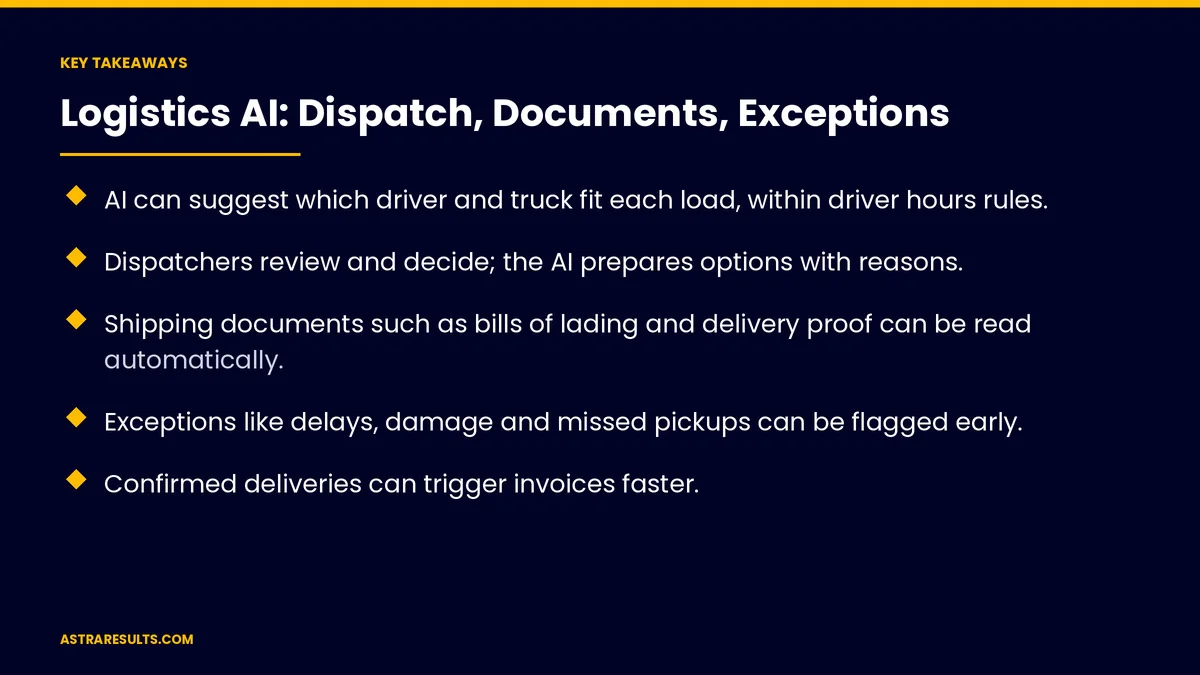
- AI can suggest which driver and truck fit each load, within driver hours rules.
- Dispatchers review and decide; the AI prepares options with reasons.
- Shipping documents such as bills of lading and delivery proof can be read automatically.
- Exceptions like delays, damage and missed pickups can be flagged early.
- Confirmed deliveries can trigger invoices faster.
- Measure on-time delivery, documents handled automatically and time to resolve exceptions.
Published: October 25, 2026 | Reading Time: ~9 minutes | Category: Industry-Specific AI
This guide covers how logistics companies use industry AI for dispatch, documents and exceptions, plus faster billing, customer updates, guardrails and what to measure. Put plainly: let AI prepare the decisions, read the paperwork and spot the problems, and keep people making the calls.
In This Playbook
- Three daily pressures
- Dispatch suggestions
- Reading documents
- Catching exceptions early
- Keeping customers informed
- Faster billing
- What guardrails does logistics AI need?
- Being found by buyers
- What to measure
- The first three months
Three daily pressures
Dispatch. Matching loads to drivers, trucks and time windows.
Documents. Bills of lading, delivery proof, invoices and customs paperwork.
Exceptions. Delays, damage, missed pickups and refused deliveries.
Built around your process. The general approach is covered in industry-specific AI.
Dispatch suggestions
Match loads to drivers and trucks. Based on location, equipment, skills and time.
Respect driver hours rules. Suggestions stay within hours-of-service limits and rest requirements.
Show reasons. Why each option fits, so dispatchers can decide quickly.
Dispatchers decide. They approve, change or override suggestions.
Route planning. Deeper route and load optimization is covered in logistics ML for routes and loads.
Reading documents
Bills of lading and delivery proof. Shipper, consignee, items, quantities and signatures.
Invoices and rate confirmations. Amounts, references and terms.
Customs papers. Key details for shipments that cross borders.
People check exceptions. Low-confidence reads go to staff, the same approach as purchase order reading.
Capture at the source. Drivers' apps record proof directly, as covered in proof of delivery apps.
Catching exceptions early
Late shipments. Compare tracking with planned times and flag risks before deadlines pass.
Damage. Flagged at the dock, as covered in damage detection at the dock.
Missed pickups and refused deliveries. Recorded with reasons and next steps.
Prioritize by impact. Key customers and urgent loads first.
Keeping customers informed
Drafted updates. Messages about delays or changes, reviewed before sending at first.
Self-service tracking. Customers check status themselves, as covered in logistics customer apps.
Fewer "where's my freight" calls. Proactive updates reduce inbound calls.
Faster billing
Invoice from confirmed delivery. Proof of delivery triggers billing.
Match rates and charges. Against the agreed rates and extra charges.
Flag disputes early. Missing documents or mismatched charges.
What guardrails does logistics AI need?
People approve important actions. Dispatch changes, customer messages and billing disputes.
Approval levels. Routine tasks can run alone once trusted, as covered in the action layer.
Logs. Every suggestion, decision and document recorded.
Compliance first. Driver hours and safety rules are never overridden by suggestions.
Being found by buyers
Show your capabilities. Clear service, lane and technology pages help procurement teams find you, as covered in logistics AI SEO.
What to measure
On-time delivery. Before and after.
Dispatch time. Minutes to assign each load.
Documents handled automatically. Share read without retyping.
Exception resolution time. From flag to fix.
Days to invoice. From delivery to billing.
The first three months
Days 1–30: choose the starting point
Pick the biggest pain: dispatch, documents or exceptions. Connect the data needed, such as loads, tracking and documents, and record current on-time rates, dispatch time and days to invoice.
Days 31–60: pilot with people reviewing
Start AI suggestions or document reading with staff reviewing every result. Track accuracy, overrides and time saved.
Days 61–90: expand and measure
Add the next area, automate routine tasks once trusted and compare on-time delivery, exception resolution and days to invoice with the baseline.
How Astra builds logistics AI
Astra Results Marketing builds industry AI for logistics companies. We suggest dispatch options within driver hours rules, read shipping documents, flag exceptions early and speed up billing from confirmed deliveries.
Dispatchers and managers stay in charge, and every action is logged. Engagements begin with an operations review through our industry-specific AI team.
Related reading
Frequently asked questions
Can AI dispatch trucks on its own?
It can suggest which driver and truck fit each load, with reasons, but dispatchers should review and decide, especially for unusual or urgent loads.
Does AI dispatch respect driver hours rules?
It should. Suggestions must stay within hours-of-service limits and rest requirements, and safety rules are never overridden.
Which documents can AI read?
Bills of lading, proof of delivery, invoices, rate confirmations and key customs details, with staff checking low-confidence reads.
How does AI help with exceptions?
By comparing tracking with plans to flag likely delays, recording damage and missed pickups and drafting customer updates for review.
Can it speed up billing?
Yes. Confirmed deliveries can trigger invoices, with rates and charges checked against rate confirmations.
Where should a logistics company start?
With its biggest pain point, such as document retyping or late exception alerts, piloted with staff reviewing every result.
Ready to bring AI into dispatch, documents and exceptions? Astra Results Marketing builds logistics AI that suggests dispatch options within driver hours rules, reads shipping documents, flags problems early and keeps your team in charge. ▸ CALL (786) 321-2866 · ▸ REQUEST YOUR CONSULTATION





