 Rated 5 star on

Personalized Engagement Without Being Creepy
Quick answer
Personalize with what customers shared, like past orders, stated preferences and account details, and it feels helpful. It turns creepy when messages reveal guesses or tracking they didn't expect. Avoid health, money and family topics. Explain why customers see a message, respect consent and frequency, and let them change their data.
Customers like messages that remember them: their last order, their preferred location, the service they use. They don't like messages that seem to know things they never shared. The line between helpful and creepy is usually about where the facts came from, and whether customers expected you to use them.
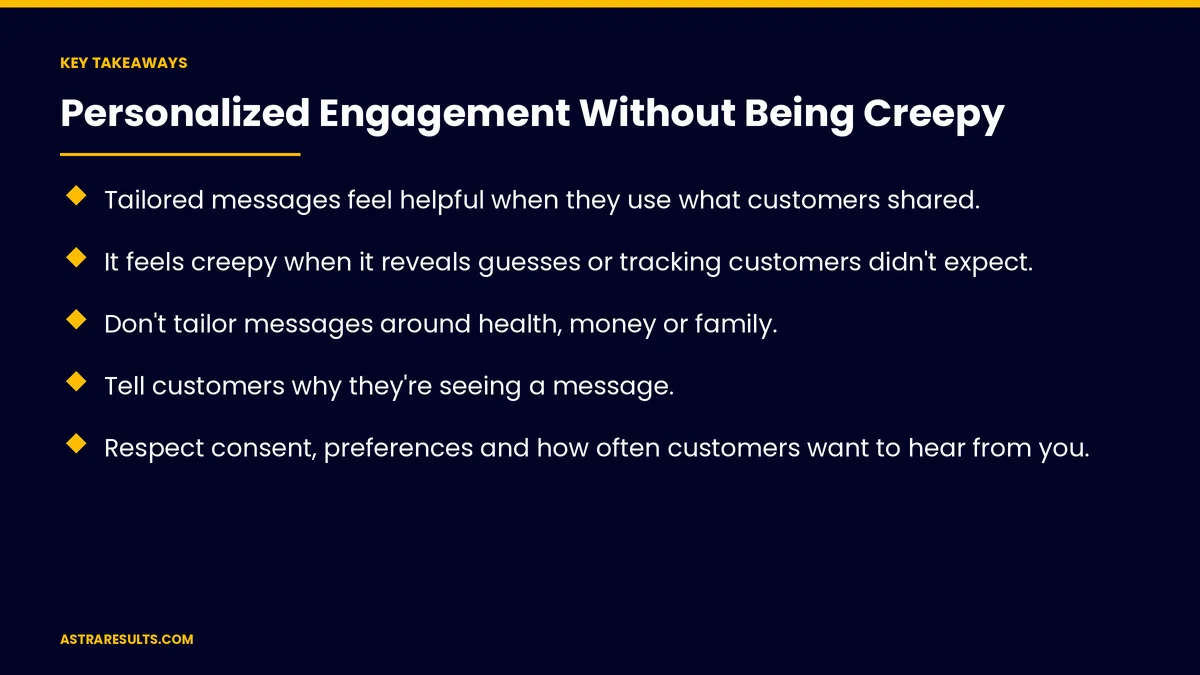
Key Takeaways
- Tailored messages feel helpful when they use what customers shared.
- It feels creepy when it reveals guesses or tracking customers didn't expect.
- Don't tailor messages around health, money or family.
- Tell customers why they're seeing a message.
- Respect consent, preferences and how often customers want to hear from you.
- Let customers see and change what you know about them.
Published: October 6, 2026 | Reading Time: ~8 minutes | Category: AI Customer Engagement
This guide covers helpful versus creepy, using what customers shared, avoiding touchy guesses, saying why, consent, how often to send, giving customers control, AI-written messages and keeping data safe. Put plainly: personalize with what customers gave you, explain why and let them choose.
In This Playbook
- Helpful versus creepy
- Use what customers shared
- Which topics should personalized messages avoid?
- Why should a message explain why it was sent?
- Consent and preferences
- Frequency
- Give customers control
- AI-written messages
- Protecting data
- Examples that work
- What to measure
- The first three months
Helpful versus creepy
Helpful. "Your filter is due for a change." They bought it from you.
Creepy. "We noticed you were looking at baby clothes elsewhere."
The test. Would the customer expect you to know this?
Use what customers shared
Purchase and service history. Reorders and reminders, as in order status to reorder.
What they told you. Location, language and favorite items.
Account details. Names and dates they gave you.
Which topics should personalized messages avoid?
Health, money and family. Don't infer or mention them.
Life events. Moves, babies or new jobs guessed from behavior.
Protected groups. Never target or leave people out based on them.
Why should a message explain why it was sent?
"Because you bought..." A simple reason builds trust.
No mystery. Customers shouldn't wonder how you knew.
Consent and preferences
Ask, then honor. What topics and channels customers want.
Consent for texts. Required for marketing messages, as covered in outbound compliance.
Language choice. Remembered everywhere.
Frequency
Fewer, better messages. As covered in email and SMS flows.
Respect quiet periods. After a complaint or a recent purchase.
Give customers control
A settings page. Topics, channels and how often.
See what you know. Basic profile details, viewable.
Easy opt-out. One click, honored right away.
AI-written messages
Your voice, with guardrails. As covered in replies in your voice.
No invented details. AI uses only approved customer data.
Review sensitive messages. People check before sending.
Protecting data
Less data. Keep only what the messages need.
Access by role. Teams see what they need.
AI safety. As covered in GenAI security.
Examples that work
Loyalty perks. As in loyalty apps.
School reminders. As in school engagement.
What to measure
Response to tailored messages. Opens, clicks and replies.
Unsubscribes and complaints. Should stay low.
Settings page use. Customers choosing what they want.
Repeat purchases. From personalized reminders.
Trust signals. Survey answers and review mentions.
The first three months
Month one: review
List the data each message uses, remove sensitive guesses and add a reason line to personalized messages.
Month two: give control
Launch a preference center, honor channel and frequency choices and review AI message guardrails.
Month three: measure
Track engagement, unsubscribes and complaints, and adjust what you personalize.
How Astra personalizes engagement
Astra Results Marketing personalizes customer engagement customers welcome. We use what customers shared, avoid sensitive guesses, explain why, honor preferences and keep AI messages within approved data.
Engagements begin with an engagement review through our AI customer engagement team.
Related reading
Frequently asked questions
What makes personalization creepy?
Revealing guesses or tracking customers didn't expect, especially on sensitive topics.
What data is safe to personalize with?
What customers shared with you: purchase history, stated preferences and account details.
Which topics should we avoid?
Health, money, family, life events guessed from behavior and protected characteristics.
How do we build trust?
Explain why customers see a message, honor their preferences and make opting out easy.
Can AI write personalized messages?
Yes, in your voice, using only approved customer data, with people reviewing sensitive messages.
What should we measure?
Engagement, unsubscribes and complaints, preference center use, repeat purchases and trust signals.
Ready for personalization customers appreciate? Astra Results Marketing personalizes engagement with data customers shared, clear reasons and full control over what they receive. ▸ CALL (786) 321-2866 · ▸ REQUEST YOUR CONSULTATION





