 Rated 5 star on

What Cross-Platform Apps Cost and Save
Quick answer
A cross-platform app usually costs less than two native apps, because shared features are built once. Features, design, system connections and platform-specific work drive the build. Testing still covers both platforms. Budget yearly for updates, upgrades and fixes. Heavy native features or demanding graphics can shrink or erase the savings.
A cross-platform app uses one codebase to serve both iPhone and Android, which usually costs less than building two separate native apps. But "less" depends on what the app does, how much needs to feel platform-specific and what happens after launch. Knowing what drives cost helps you budget for the app's full life.
Key Takeaways
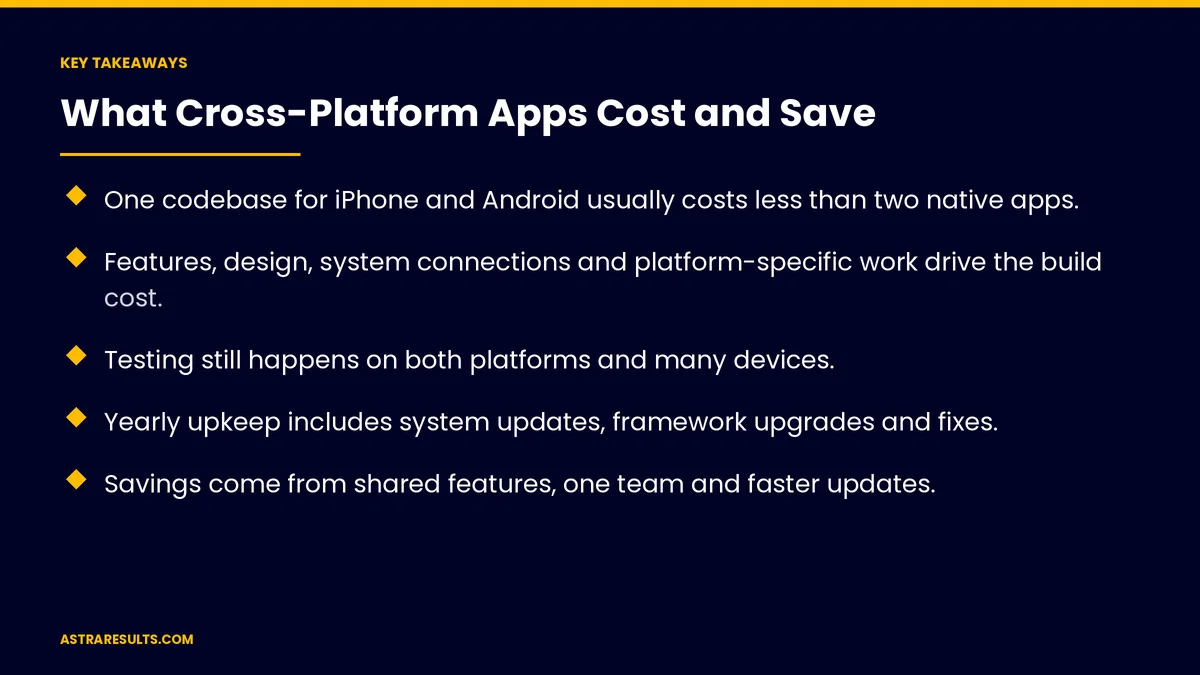
- One codebase for iPhone and Android usually costs less than two native apps.
- Features, design, system connections and platform-specific work drive the build cost.
- Testing still happens on both platforms and many devices.
- Yearly upkeep includes system updates, framework upgrades and fixes.
- Savings come from shared features, one team and faster updates.
- Heavy platform-specific features can reduce or erase the savings.
Published: October 29, 2026 | Reading Time: ~9 minutes | Category: Cross-Platform Apps
This guide covers cross-platform app costs: what drives the build, design, connections to your systems, platform-specific work, testing, store setup, yearly upkeep, where one codebase saves, when it doesn't and what to measure. Put plainly: budget for the build and the yearly upkeep, and expect savings mainly from shared features and one team.
For the full business case, see the business case for one codebase.
In This Playbook
- What drives the build
- Design
- Connections to your systems
- Platform-specific work
- Testing
- Store setup
- What yearly upkeep does a cross-platform app need?
- Where does one codebase save money on an app?
- When it doesn't save
- Comparing quotes
- What to measure
- The first three months
What drives the build
Features. Each screen and function adds work.
Accounts and data. Sign-in, profiles and saved information.
Payments. Cards, wallets or subscriptions.
Offline use. Working without signal adds complexity.
Design
One design system. Shared across both platforms.
Platform touches. Small differences users expect on each.
Accessibility. Built in from the start.
Connections to your systems
CRM, booking or inventory. Each connection adds work.
Existing APIs help. New ones cost more to build.
Platform-specific work
Native features. Wallet passes, widgets or deep camera use.
Some code per platform. Even in a shared codebase.
More native work, smaller savings. The key trade-off.
Testing
Both platforms. iPhone and Android.
Many devices. Older and budget phones too, as covered in performance in React Native.
Fixes once, tested twice. Shared code, separate checks.
Store setup
Two store listings. App Store and Google Play.
Reviews and policies. Each store has its own rules.
Developer accounts. Yearly fees on Apple's side.
What yearly upkeep does a cross-platform app need?
System updates. New iOS and Android versions each year.
Framework upgrades. As covered in React Native maintenance.
Fixes and small features. Ongoing work after launch.
Hosting and services. Servers, notifications and analytics.
Where does one codebase save money on an app?
Shared features. Built once for both platforms.
One team. Instead of separate iOS and Android teams.
Faster updates. New features ship to both at once.
The wider math is covered in the business case for an app.
When it doesn't save
Mostly native features. Two sets of platform code anyway.
Demanding graphics or speed. Native may fit better.
Maybe no app at all. As weighed in when a mobile website beats building an app.
Comparing quotes
Same scope. Features, design and connections.
Upkeep included. Not just the build.
Five-year view. As covered in what custom software costs.
What to measure
Build cost versus quotes. On budget or not.
Share of shared code. Higher usually means more savings.
Time to ship updates. To both platforms.
Yearly upkeep cost. Tracked against plan.
Results. Users, orders or bookings from the app.
The first three months
Month one: scope
List features, connections and platform-specific needs, and decide whether cross-platform fits.
Month two: compare
Get quotes with the same scope, including yearly upkeep, and compare five-year costs.
Month three: plan
Choose a partner, set a budget for build and upkeep and agree on what success looks like.
How Astra prices cross-platform apps
Astra Results Marketing builds cross-platform apps and explains what drives cost. We scope features, connections and platform-specific work, include yearly upkeep and show where one codebase saves and where it doesn't.
Engagements begin with an app planning session through our cross-platform app development team.
Related reading
Frequently asked questions
Is a cross-platform app cheaper than two native apps?
Usually, because shared features are built once and one team maintains them, but heavy native features reduce the savings.
What drives the cost of a cross-platform app?
Features, design, connections to your systems, platform-specific work, testing and store setup.
What does a cross-platform app cost to maintain?
Yearly work includes system updates, framework upgrades, fixes, small features and hosting.
When doesn't cross-platform save money?
When most features need native code, or the app needs demanding graphics or speed.
How should we compare quotes?
With the same scope, upkeep included, over five years.
What should we measure?
Build cost versus quotes, share of shared code, time to ship updates, yearly upkeep and results.
Want to know what your app should cost to build and run? Astra Results Marketing scopes cross-platform apps clearly, includes yearly upkeep and shows where one codebase saves and where it doesn't. ▸ CALL (786) 321-2866 · ▸ REQUEST YOUR CONSULTATION





