 Rated 5 star on

Is an iPhone App Right for Your Business?
Quick answer
An iPhone app makes sense when many customers use iPhones and return often, such as weekly orders or regular bookings. Check your own website analytics for the device split. Features like Apple Pay and Wallet passes can add real value. Plan for Apple's $99 yearly developer fee and annual updates. A strong mobile website may come first.
Many business owners ask whether they need an iPhone app, usually after seeing a competitor launch one. The answer depends less on trends and more on your own customers: what phones they use, how often they come back and whether iPhone features would make their experience better. A short self-check can answer the question before you spend anything.
Key Takeaways
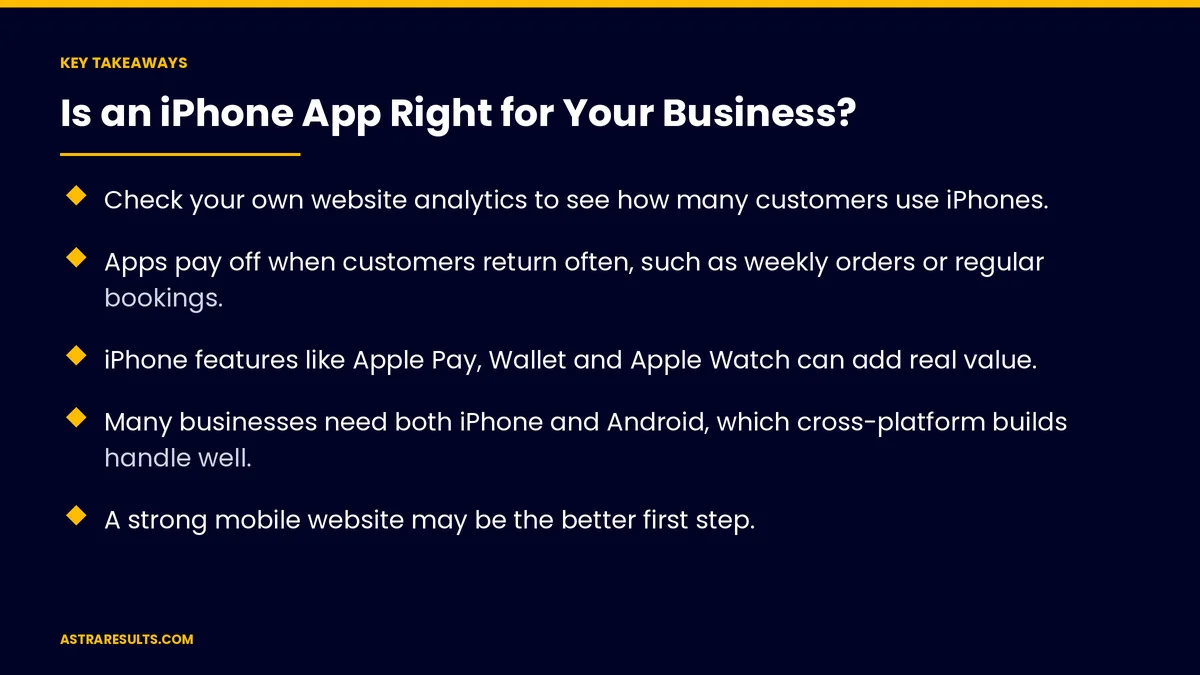
- Check your own website analytics to see how many customers use iPhones.
- Apps pay off when customers return often, such as weekly orders or regular bookings.
- iPhone features like Apple Pay, Wallet and Apple Watch can add real value.
- Many businesses need both iPhone and Android, which cross-platform builds handle well.
- A strong mobile website may be the better first step.
- Plan for Apple's yearly developer fee, App Store review and annual updates.
Published: October 11, 2026 | Reading Time: ~8 minutes | Category: iPhone App Development
This guide offers a quick self-check for an iPhone app: your customers' phones, how often they return, iPhone features worth using, choosing iPhone only or both platforms, simpler options, the yearly upkeep and examples of who usually benefits. Put plainly: let your customers' habits decide, not your competitors' apps.
In This Playbook
- Question 1: Do your customers use iPhones?
- Question 2: Do customers come back often?
- Question 3: Would iPhone features help?
- Question 4: iPhone only or both platforms?
- Question 5: Is a simpler option enough?
- Question 6: Can you keep it up?
- Who usually benefits
- Who usually doesn't
- Next steps
- What to measure
- The first three months
Question 1: Do your customers use iPhones?
Check your analytics. Your website data shows which devices visitors use.
Look at buyers, not just visitors. Which devices place orders or bookings?
Mind your audience. The split varies by industry, age and location.
If it's mixed, plan for both. Most businesses serve iPhone and Android customers.
Question 2: Do customers come back often?
Frequent use favors an app. Weekly orders, regular bookings or ongoing loyalty.
Rare purchases rarely need one. A once-a-year service may not earn a spot on a phone.
Look at your repeat rate. How often your best customers return today, as weighed in when to add a mobile app.
Question 3: Would iPhone features help?
Apple Pay. Faster checkout, as covered in Apple Pay loyalty.
Wallet passes. Loyalty cards, tickets and coupons always within reach.
Apple Watch. Workouts, reminders and quick check-ins, as in fitness Swift apps.
Face ID, widgets and lock-screen updates. Quick, secure access and live order status.
Question 4: iPhone only or both platforms?
iPhone first. Sometimes makes sense if most of your buyers use iPhones.
Both platforms. Often better, with one cross-platform codebase, as weighed in native, cross-platform or web.
Native for deep features. Heavy use of Apple-specific features may favor a native build.
Question 5: Is a simpler option enough?
A fast mobile website. Handles most needs for many businesses.
Wallet passes alone. Loyalty without a full app.
Text updates. Order and appointment reminders without a download.
Try these first. Then build an app if customers use them heavily.
Question 6: Can you keep it up?
Apple's developer fee. $99 a year.
App Store review. Apps must meet Apple's guidelines.
Yearly updates. New iPhone software arrives every year, as covered in iOS and Android updates and Swift app maintenance.
Promotion. An app needs marketing to get downloads.
Who usually benefits
Restaurants. Reordering favorites and loyalty.
Retail chains. Rewards, store stock and offers.
Fitness studios. Class booking and Apple Watch workouts.
Booking-based services. Salons, clinics and classes with regular visits.
Who usually doesn't
Rare purchases. Roofing, legal matters or annual services.
Information-only sites. Where a website does the job.
No plan for upkeep. Apps without maintenance budgets fall behind.
Next steps
Run the numbers. As covered in the business case for an app.
Start small. The core features that bring customers back, as in building an iPhone app.
For tablets. A separate question, covered in is an iPad app right and iPad vs Android tablet.
What to measure
iPhone share of buyers. From your analytics.
Repeat rate. How often customers return.
Use of simpler options. Wallet passes, texts and mobile site.
Active app users. If you build one.
Repeat purchases. App users versus non-users.
The first three months
Days 1–30: check the facts
Review analytics for device use among buyers, measure repeat rates and list iPhone features that would help your customers.
Days 31–60: try simpler options
Improve the mobile site and test wallet passes or text updates. Track how often customers use them.
Days 61–90: decide
If repeat use is strong and iPhone features add value, plan an app for iPhone or both platforms, with a budget for upkeep. If not, keep improving the simpler options.
How Astra helps decide on iPhone apps
Astra Results Marketing helps businesses decide whether an iPhone app is right for them. We review your device data and repeat rates, test simpler options and plan apps for iPhone or both platforms when the case is clear.
When you're ready, we build the core features that bring customers back. Engagements begin with an app readiness review through our iPhone app development team.
Related reading
Frequently asked questions
How do we know if our customers use iPhones?
Check your website analytics, especially for visitors who place orders or bookings. The split varies by industry, age and location.
Does every business need an iPhone app?
No. Apps pay off when customers return often. For rare purchases or information-only needs, a strong mobile website usually works better.
Should we build for iPhone only?
Sometimes, if most buyers use iPhones. Many businesses need both, which a cross-platform build handles with one codebase.
What iPhone features make an app worthwhile?
Apple Pay for fast checkout, Wallet passes for loyalty, Apple Watch for workouts and reminders, Face ID, widgets and live order updates.
What ongoing costs come with an iPhone app?
Apple's $99 yearly developer fee, App Store review, annual updates for new iPhone software and marketing to drive downloads.
What should we try before building an app?
A faster mobile website, wallet passes and text updates. If customers use them heavily, an app may be the next step.
Ready to know whether an iPhone app fits your business? Astra Results Marketing reviews your customers' devices and habits, tests simpler options and builds iPhone apps when your customers will use them. ▸ CALL (786) 321-2866 · ▸ REQUEST YOUR CONSULTATION





